What counts as "operations" here?
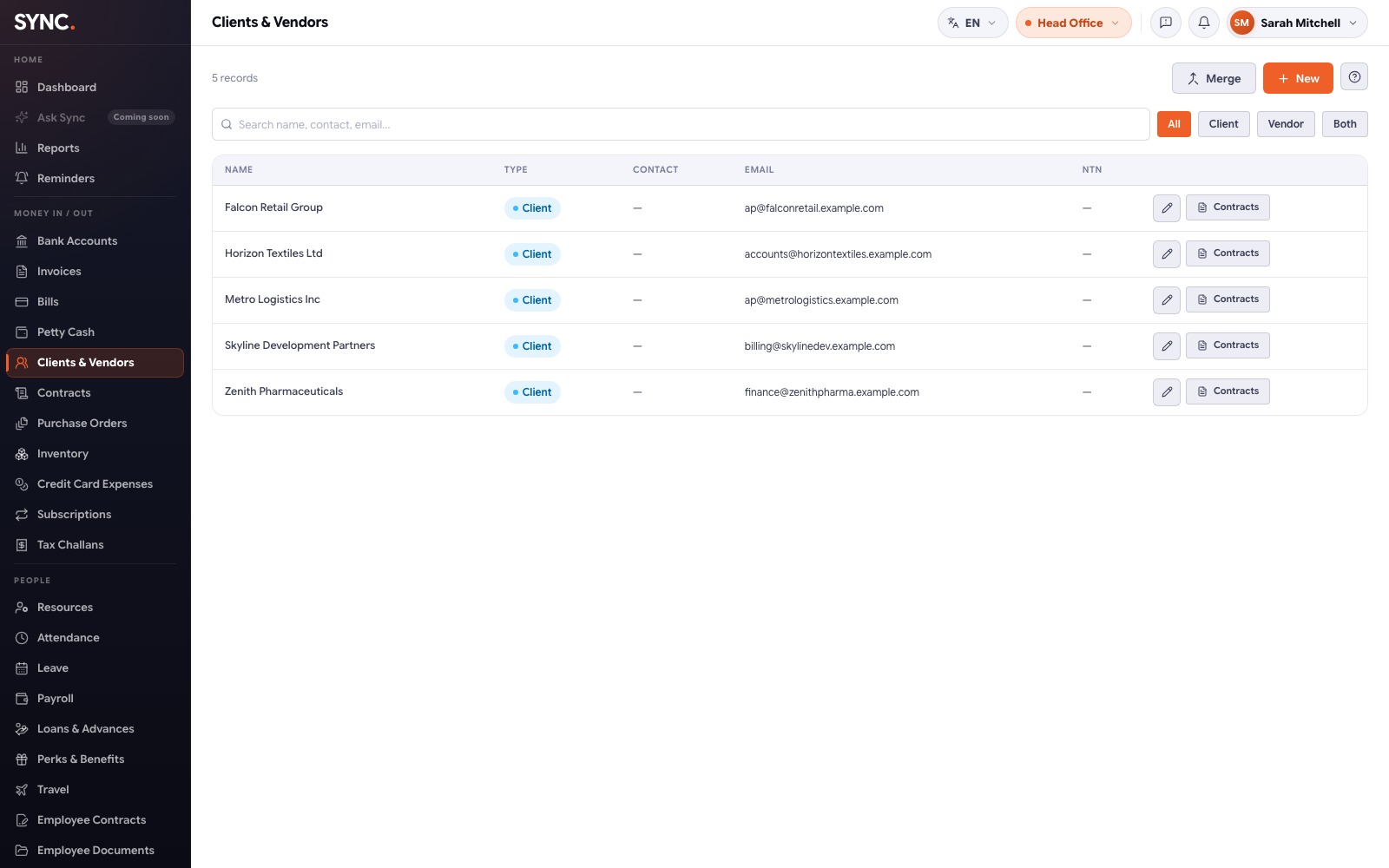
Everything that isn’t strictly finance or HR but still needs a real system: client and vendor relationships, contracts, inventory, travel claims, recurring subscriptions and internal reminders — the day-to-day layer most small businesses run on spreadsheets and memory.
How does inventory tracking actually work?
Add an item once — its type, serial number if it has one, and who it’s assigned to — then reassign or return it as it moves between people or wings. No spreadsheet that’s only accurate the week someone last updated it.
Do travel claims need a separate expense tool?
No — a trip logged against a client or project can flow straight into payroll as a reimbursement, so there’s no separate expense-report process running in parallel with the real one.
Can I use just the operations modules without turning on payroll or invoicing?
Yes — every module is opt-in. Many teams start with clients and contracts alone and turn on finance or HR modules later, at no extra cost, when they’re ready.
How does this connect to the finance side?
It’s the same underlying business — a travel claim becomes a payroll line, a client record ties directly to its invoices, a vendor ties to its bills. Nothing needs re-entering between "operations" and "finance" because it was never two separate systems.
Can I control who can edit or delete a client, contract or inventory record?
Yes — viewing a record never implies write access. Editing, deleting or merging a client is its own permission, separate from just browsing the directory, and the same split runs through contracts, inventory and every other operational record — you decide how far each person's access goes.